
Choosing your first menstrual cup can bring up a surprisingly simple question:
What size menstrual cup do I need?
If you’re looking at Small and Large and aren’t sure which one belongs in your cart, you’re not alone.
Menstrual cup sizing isn’t universal, and there’s no single size that’s right for every woman. Your flow, body, comfort preferences, and previous experience with menstrual cups can all play a role.
This menstrual cup size guide will help you understand the differences so you can make a more confident choice.
How Do Menstrual Cup Sizes Work?
Most menstrual cup brands offer more than one size, often labeled Small and Large or Size 1 and Size 2, but sizing isn’t standardized between manufacturers.
But here’s the important part:
A Small from one brand may not have the same dimensions or capacity as a Small from another.
That’s why it’s better to look at the specific cup you’re considering rather than choosing based only on the word “Small” or “Large.”
What Size Menstrual Cup Do I Need?
There isn’t one rule that determines your ideal size.
Instead, consider a few factors together:
Let’s look at each one.
Consider Your Menstrual Flow
Your flow is one useful place to start.
If you generally have a lighter to moderate flow, a smaller cup may provide enough capacity for your needs.
If you regularly experience a heavier flow, you may prefer the additional capacity of a larger cup.
But flow shouldn’t be your only consideration.
A larger cup isn’t automatically better just because it can hold more. Comfort and fit matter too.
Think of capacity as one part of the decision rather than the entire decision.
Consider Your Comfort
If you’re completely new to menstrual cups, the idea of inserting one may already feel unfamiliar.
Some beginners may feel more comfortable starting with a smaller cup.
Others may find that a larger cup fits their body better.
The goal isn’t to choose the smallest cup possible.
It’s to find a cup that feels comfortable when properly positioned and provides the capacity you need for your period.
Does Age Determine Menstrual Cup Size?
You may have seen menstrual cup charts that say women under a certain age should choose Small while women over that age should choose Large.
Age can be one consideration, but it shouldn’t be treated as a universal rule.
Bodies are different.
Two women of the same age can have different flows, anatomy, childbirth histories, and comfort preferences.
Instead of choosing your cup based on your birthday alone, consider the complete picture.
Does Giving Birth Affect Menstrual Cup Size?
Pregnancy and vaginal childbirth can affect the pelvic floor and reproductive anatomy, which is why childbirth history appears in many menstrual cup sizing recommendations.
Women who have given birth vaginally may find that a larger cup works better for them.
But again, this isn’t an absolute rule.
If you’ve given birth, that doesn’t automatically mean you must use a Large.
Fit and comfort still matter.
Does Cervix Height Matter?
It can.
Your cervix sits at the upper end of the vaginal canal, and its position can vary from woman to woman. Its position can also change throughout the menstrual cycle.
Cup length and shape can therefore affect comfort and accessibility.
This is also why comparing menstrual cups only by Small versus Large doesn’t tell you everything about how a particular cup may fit your body.
If you’re unsure about your anatomy or have concerns about finding an appropriate fit, a healthcare professional can help.
Small vs. Large Menstrual Cup: A Simple Starting Point
Here’s an easy way to think about your options.
A Small Menstrual Cup May Be Worth Considering If:
- You have a lighter to moderate flow
- You’re new to menstrual cups
- You prefer a smaller cup
- You haven’t given birth vaginally
- A smaller size feels more comfortable for your body
A Large Menstrual Cup May Be Worth Considering If:
- You have a moderate to heavier flow
- You want more capacity
- You’ve given birth vaginally
- You’ve previously found smaller cups aren’t the right fit
- A larger size feels more secure and comfortable for your body
These are starting points—not strict rules.
Does a Bigger Menstrual Cup Mean Better Protection?
Not necessarily.
A larger cup may offer greater capacity, but the best menstrual cup is one that fits your body comfortably and works with your flow.
Simply choosing the largest cup available doesn’t guarantee a better experience.
Similarly, choosing the smallest cup doesn’t necessarily make using a menstrual cup easier.
How Do You Know If Your Menstrual Cup Size Is Right?
It Feels Comfortable
When properly inserted and positioned, a menstrual cup should generally feel comfortable enough that you’re not constantly aware of it.
It Has Enough Capacity
Your cup should also provide enough capacity for your flow when emptied according to its instructions.
If you’re repeatedly uncomfortable or having problems getting your cup to work properly, size may be one factor worth considering.
It can take some experimentation to find the combination of cup, size, and technique that works best for your body.
What If I’m Between Menstrual Cup Sizes?
If both sizes sound like they could work for you, don’t panic.
There’s rarely a perfect checklist where every answer points toward the same size.
Start with the factors that matter most to you.
For example:
Someone new to cups with a lighter flow may lean toward Small.
Small
Someone with a heavier flow who wants additional capacity may lean toward Large.
Large
Your previous experience matters too. If you’ve already used menstrual cups, what you liked—or didn’t like—about your previous cup can help guide your next choice.
Andy Flowers Small vs. Large Menstrual Cups
Andy Flowers menstrual cups are available in Small and Large, giving you two options based on your body, flow, and personal preferences.
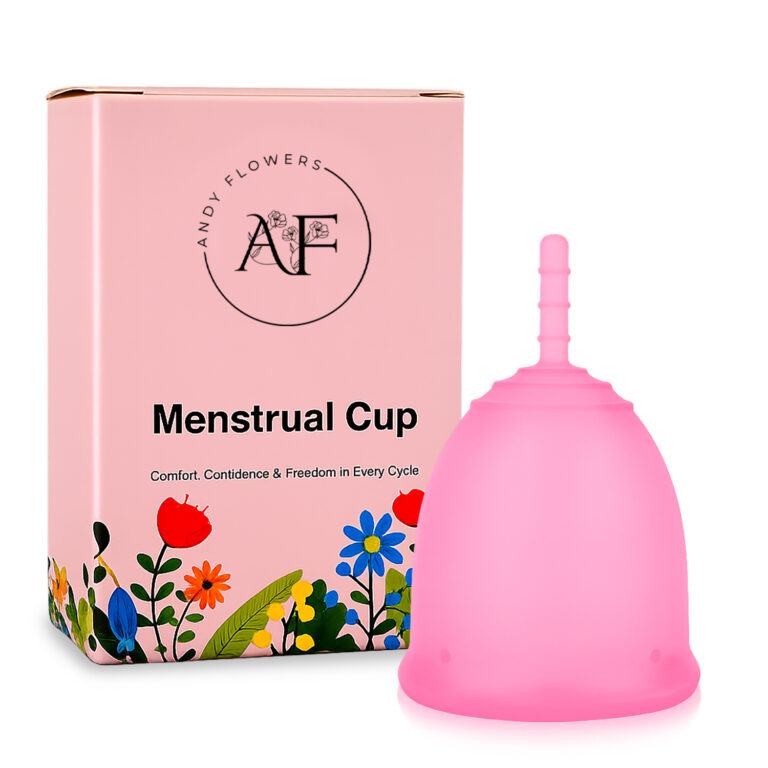
Consider Small if you prefer a smaller cup or have a lighter to moderate flow.
It can also be a starting option for women who are new to menstrual cups and feel more comfortable beginning with the smaller size.
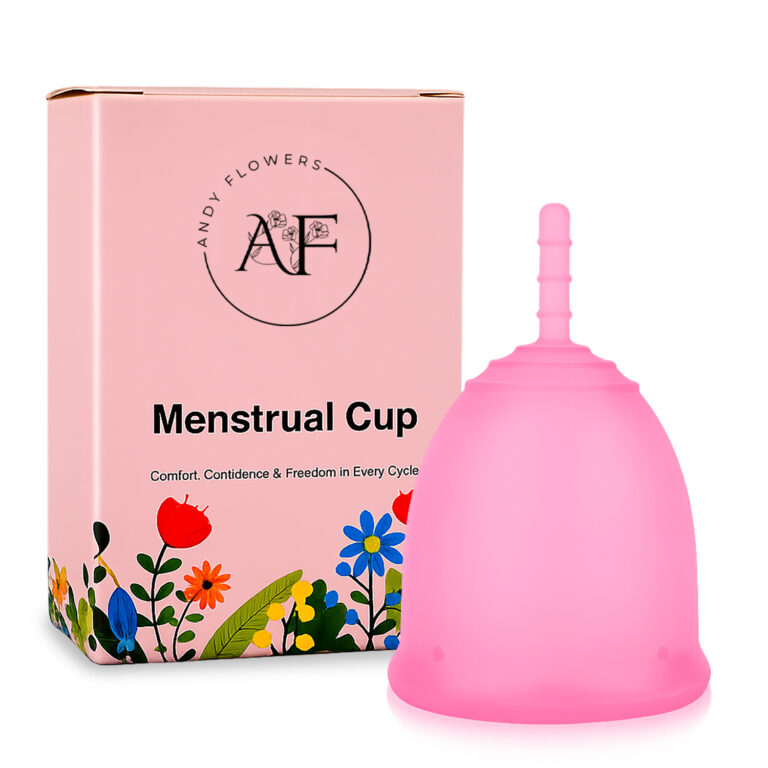
Consider Large if you prefer additional capacity, experience a heavier flow, or have found that a larger menstrual cup works better for your body.
The better choice is the one that works for you.
Can I Switch Menstrual Cup Sizes?
Absolutely.
Your first cup doesn’t have to be your forever size.
Your flow can change. Your body can change. Pregnancy and childbirth can change what feels comfortable. And sometimes you simply learn more about what you prefer after using a cup for a while.
If one size isn’t working well for you, trying another size may help.
Choosing Your Menstrual Cup Doesn’t Have to Be Complicated
There’s no universal formula for finding the perfect menstrual cup size.
Start with your flow, comfort preferences, anatomy, childbirth history, and previous cup experience.
Then give yourself some room to learn.
Menstrual cups can take practice, and finding your preferred size can be part of that process.
Once you’ve chosen your cup, the next step is learning how to use it comfortably.
Already have your cup? Read our guide: How to Insert a Menstrual Cup.
Find Your Andy Flowers Menstrual Cup
Andy Flowers menstrual cups are available in Small and Large so you can choose the option that best fits your needs.
Made from soft, flexible medical-grade silicone, they’re designed for reusable period protection with up to 12 hours of wear, depending on your flow.